
The Shattering of Illusions: Iran, Israel, and the End of Strategic Restraint

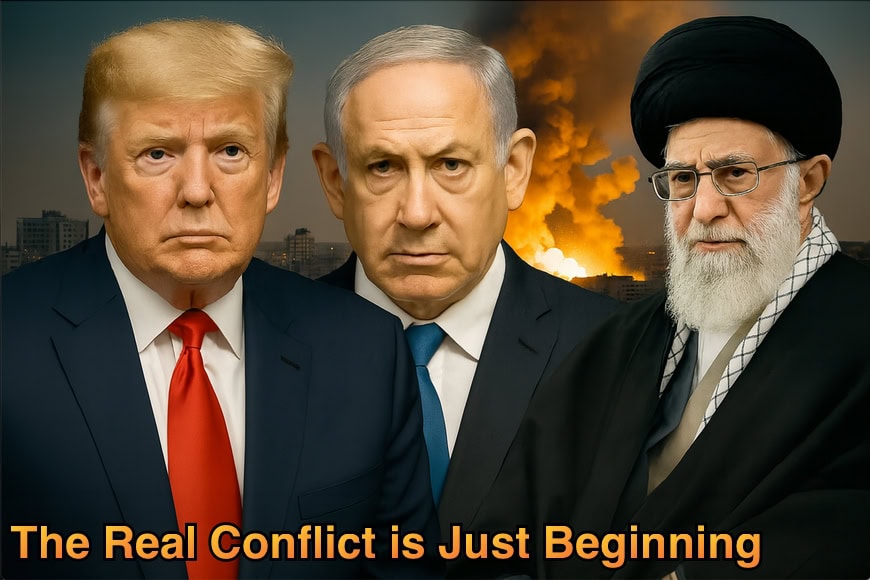
For years, the threat of open war between Israel and Iran simmered on the margins of global attention—a shadow conflict fought through proxies, assassinations, and ideology. Now it’s out in the open. Joint Israeli-American airstrikes on Iran’s nuclear infrastructure have crossed a threshold. But this isn’t just a war of bombs. It’s a war of narratives, of myths exposed and ideologies unraveling.
A Theology of Death
Hamas, the IRGC, and the Muslim Brotherhood are not merely political actors; they are ideological movements rooted in a theology of redemptive violence. Pietist jihadism holds that Islamic weakness stems from moral decay, and redemption comes through martyrdom. In this worldview, Gaza’s destruction is not a failure but a sacred offering. The goal isn’t governance. It’s divine validation.
Hamas frames itself as the vanguard of Islamic resurgence, not a nationalist liberation front. Iran’s IRGC fuses this same theology with state power, spawning proxy forces—Hezbollah, the Houthis, Islamic Jihad—as distributed martyrdom engines. Their aim is not compromise but confrontation. Death isn’t collateral. It’s the currency.
Terrorism as Doctrine
Western analysts often treat terrorism as a tactic of the weak. But for Iran and Hamas, it is central doctrine. It collapses distinctions between combatants and civilians, war and politics. Its function is to provoke retaliation, amplify suffering, and manufacture grievance.
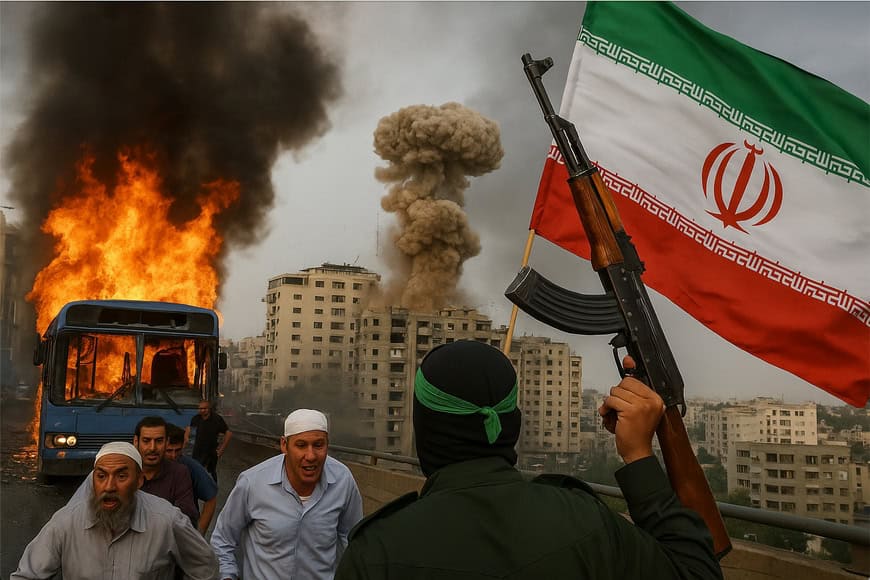
Hamas doesn’t just endure civilian deaths; it orchestrates them. As Haviv Rettig Gur put it: “The death of Gaza is the strategy.”
The pattern is old: strike Israel, provoke a response, broadcast the rubble, recast the narrative. The victim becomes the aggressor. But that strategy only works if the enemy restrains itself. On October 7 2023, Hamas broke the illusion. The brutality of that day shattered any notion of coexistence. What followed was war without euphemism.
The Energy Behind the Ideology
Behind the martyrdom is a more material engine: oil. Iran’s theocracy has always been a petrostate wrapped in prophecy. Its reach—proxies, propaganda, defiance—is powered by hydrocarbons. The 1979 revolution itself was as much about reclaiming oil sovereignty as about Islam.
Helen Thompson’s insight in Disorder is apt: energy isn’t just fuel. It’s narrative. Iran’s ability to resist and influence has risen and fallen with oil markets. But it never built a post-oil economy. Sanctions revealed this fragility.
The same energy logic shapes its enemies. The B-2 bombers that hit Fordow ran on jet fuel, not hydrogen. Europe’s remilitarization won’t be powered by wind turbines. A carbon-free geopolitical world is fantasy.
Israel’s Strategic Pivot
Hamas’ attack on Israel smashed its assumptions. Retaliation no longer deters enemies who seek it. Hezbollah, Hamas, the Houthis—their arsenals weren’t stockpiles. They were there to be used.
Israel shifted from deterrence to dismantling. The goal was not just defense but breaking the ideological machine itself. In coordination with the U.S., Israel targeted Iran’s core: nuclear sites, missile launchers, IRGC leaders. The myth of invulnerability collapsed.
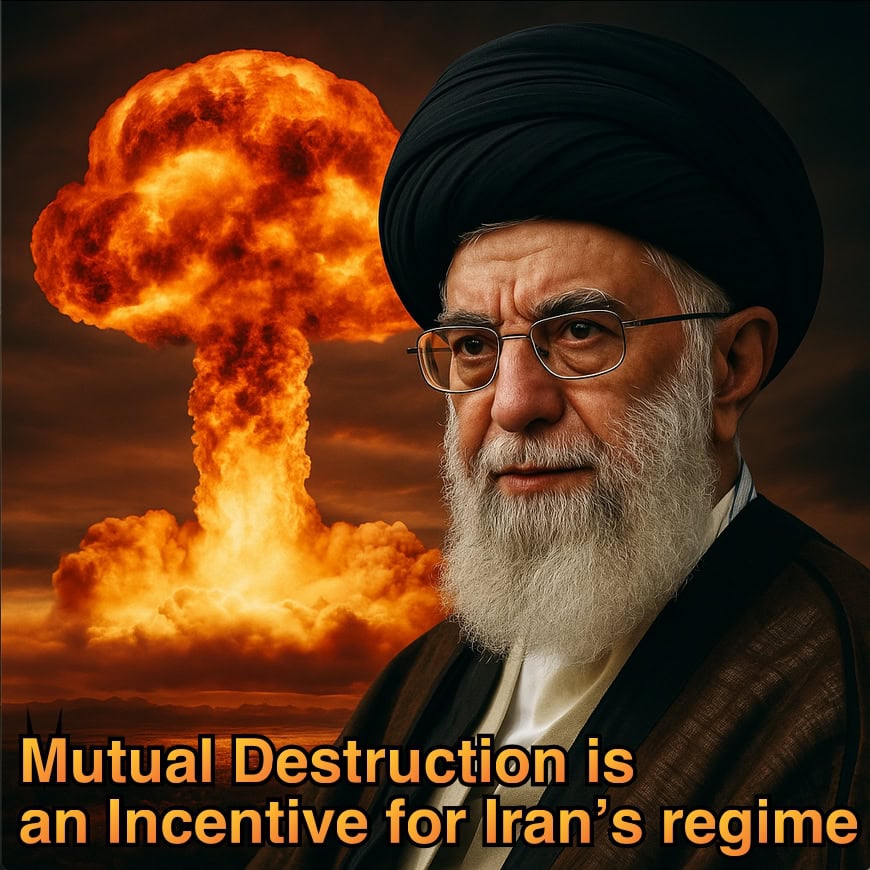
Michael Oren summed it up: for Iran’s regime, mutual destruction isn’t deterrence. It’s an incentive. The Islamic Republic sanctifies martyrdom. Survival through escalation, not stability, is its logic.
The Emptiness of Iranian Power
For decades, Iran postured as a regional giant. But the war exposed its hollow core. Its military is theatrical—drones, missiles, slogans—but lacks air power or naval reach. Its economy is stagnant, its command brittle.
Meanwhile, Israel’s operations revealed unmatched precision: targeted assassinations, signal warfare, AI-directed drones, F-15s and F-35s delivering kinetic blows with strategic clarity. The asymmetry is stark. Iran has reach, but not resilience.
The Strike That Shattered the Spell
The June 21 U.S. strike was quiet, sudden, and devastating. B-2s dropped 30,000-pound munitions on nuclear sites long thought invulnerable. Fordow. Natanz. Isfahan. Decades of defiance reduced to rubble in minutes. The silence afterward wasn’t restraint. It was shock.
Iran’s deterrence relied on ambiguity, proxy escalation, and a belief that America wouldn’t act. That belief is broken. The regime responded with a symbolic strike on Qatar. No damage. No effect. Only ritual.
The psychological blow is the real story. A state built on divine resistance was caught exposed, brittle, and afraid. The myth cracked. And in a theocracy, when belief falters, collapse begins.
The Alternative Perspective
Critics of Oren and Gur argue that Iran, Hamas, and Hezbollah, for all their rhetoric, are ultimately rational actors. They point to patterns of restraint, strategic calculation, and political pragmatism: Iran avoiding direct war with Israel, Hezbollah focusing on Lebanese power politics, Hamas negotiating ceasefires when pressure mounts.
In this view, religious language serves internal legitimacy and deterrence, not apocalyptic intent. Dismissing these actors as irrational, they warn, risks turning political conflicts into holy wars and foreclosing any path to containment or diplomacy.
While I find Oren and Gur’s framing more persuasive, the alternative view deserves recognition—if only to remind us that the danger may lie as much in ideology as in our failure to read it clearly.
JCPOA and WMD
Iran’s nuclear program isn’t a phantom. It’s measured, enriched, and real. No civilian program needs 60% purity. Israel’s 2018 raid uncovered blueprints, warhead designs, hard proof.
The JCPOA didn’t stop the bomb. It preserved the path. Its loopholes ignored the missile threat—the actual delivery system. Iran used the time to harden and expand. What it can launch today is as dangerous as what it may enrich tomorrow.
Strategic Failure in Washington
For decades, U.S. Middle East policy has swung between naivety and overreach. Early realism prioritized oil and restraint. Then came the disasters: Gulf War entanglement, Iraq occupation, the fantasy of democracy at gunpoint.
Obama bet on diplomacy with Iran, weakening ties with Saudi Arabia. Trump withdrew from the deal but failed to replace it with strategy. His “maximum pressure” rattled markets more than Tehran. Biden’s exit from Afghanistan and drift back toward Iran only further blurred U.S. credibility.
Even after the strike, Trump seems confused—still talking about “making Iran great again,” blind to the immediate missile threat and to the link between Iran’s oil and China’s rise.
China, the world’s largest oil importer, lacks strategic reserves. Its lifeline flows through U.S.-patrolled seas. Iran and Russia supply nearly half its crude. This isn’t just commerce. It’s strategic alignment. Crippling Iran tightens the noose on China.
As Behnam Ben Taleblu said: “If there ever was a time for maximum pressure, it’s now.”
Gaza and the Moral Fog
But for much of the world, it isn’t Iran that dominates the narrative. It’s Gaza.
“Gaza is what is tearing people apart,” said CNN’s Clarissa Ward. The images of destruction, starving children, and shattered hospitals have done more to undermine Western moral authority than any missile test.
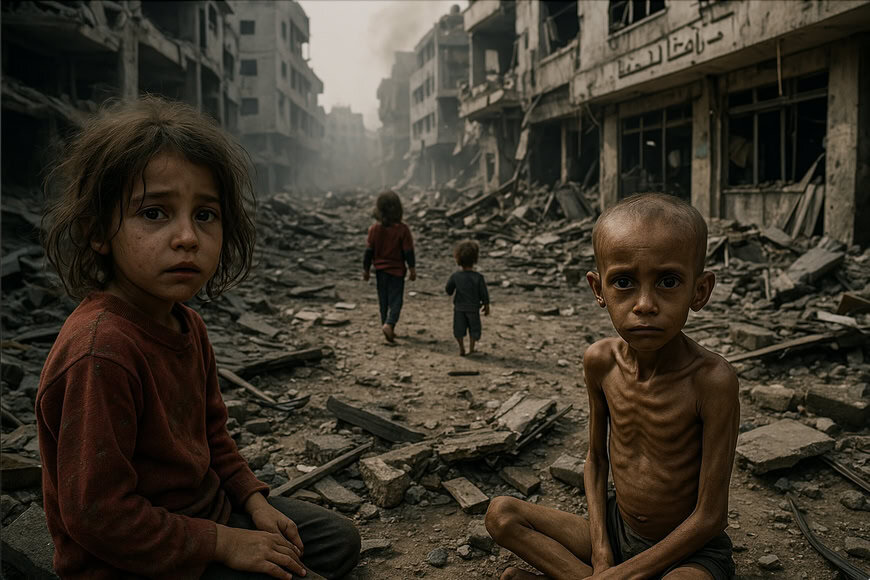
Critics argue Israel’s strategy misunderstands Hamas. Force can degrade infrastructure, but it fuels the very radicalism it hopes to defeat. Civilians pay the price. International law bends. Legitimacy erodes.
Gur doesn’t deny the suffering. He sees Hamas as trading lives for leverage, embedding war beneath homes and hospitals. But he also faults Israel’s lack of foresight, especially in aid delivery. Humanitarian catastrophe is not just morally costly. It’s strategically self-defeating.
Still, Gur is clear: Hamas must go. Hostage-taking and martyrdom as statecraft cannot be allowed to succeed. Only then can anything resembling a future begin..
What Comes Next
The world shifted last week, though most haven’t registered it. Markets shrugged. Central banks stayed on script. But something old gave way. A theology of martyrdom met a military no longer willing to observe the rituals of restraint. Iran may endure, but its myth—of impunity, of inviolability—is broken.
The strike on Iran’s nuclear core wasn’t closure. It was ignition. After decades of provocation without consequence, Israel and the United States rewrote the rules—quickly, surgically, and with intent. It wasn’t just Israel acting in self-defense. It was a signal—felt in Riyadh, Moscow, and Beijing—that the game has changed.
But the danger remains. Iran’s ambitions are damaged, not dead. Its enriched material may still be scattered in tunnels no satellite can see. There is no diplomatic off-ramp, no trust, and no shared fiction to retreat to. What begins now is not resolution, but reckoning.
The post-Cold War framework—deterrence by ambiguity, diplomacy by denial—is collapsing. What replaces it will be shaped not by process, but by force, clarity, and hard choices. The fuse is lit. Most just haven’t realized the detonation has already begun.
Like Art's Work?

Share this Post:

Read More Posts
“Gur is clear: Hamas must go”
As you say previously above, Hamas is an ideological movement. As such, it cannot be defeated militarily except by killing ALL sympathetic Palestinians, and there are millions of them (and growing).
The influence of Hamas can only be reduced by providing a better alternative. The operation in Gaza is very far from that.
This is the clearest exploration of this situation I’ve read. Of course, regular people suffer. It will be interesting to see how this works out.
Thank you, Art. So much to think about here.
Thanks, Joh Paul.
All the best,
Art
How do you fight an enemy that uses the death of innocents as shields to win the approval from those who have empathy for those who are slaughtered in war. Not by fighting on their terms. There have to be more human solutions than these brutal conflicts. How and where did they get the funding and materials to build the infrastructure of tunnels under critical infrastructure and stock them with missals and munitions? Would it not have been more prudent to continue the occupation of Gaza while improving the lives of the people living there and preventing thuggish groups like Hamas from stealing so much funding and building the infrastructure for war? The ancient antisemitism and the resulting holocaust forced the Jews to seek a place that they governed and which they could defend. This they have done and are doing, but ideologies based on religious beliefs have led to conflict with modern armaments make it clear that this is no longer tenable. They must seek a workable peace with their neighbors in country with open borders and a unified government governing all.
Thanks for your comments, Conrad.
Best,
Art
Art, what is your position on Zionism?
I have no positions on ideologies, Josh.
All the best,
Art
Art – Great analysis. The game has definitely changed.
Thanks, Carl.
Best,
Art
Good article Art! You are on point!
Good article Art! You are on point!
Thanks, Mark.
All the best,
Art
It’s your website to write what you like, but I come here to read about oil and energy.
A fair bit of what is written here is merely your opinion, which you are welcome to, but you should recognise that you have no particular better insight as to what really happened other than what you read and your interpretation thereof. It seems coloured by where you live and what you are exposed to – I’m from another continent and am exposed to other sources, so your comments sound distinctly coloured by the propaganda you likely are immersed in and cannot see.
As you write in your blurb, my suggestion is it’s probably best if you stick to ‘unfiltered, data-backed takes on energy and its colossal role in the world’s economic pulse’.
Despite the ‘geo’ in Geopolitics, what you have written isn’t your field of expertise and I’d rather read what you have to day about petroleum geology.
Mike,
It is indeed my website and I will write what I want. Go elsewhere. There are no refunds for free information.
Art
You guys shouldn’t be using AI to create fake photos in a serious article. Your second photo above shows a guy holding up a rifle whose left hand is coming out of his right shoulder. If you hold your hand up like that, with its back to the camera, the thumb comes out of the shoulder side of the hand, not the outside – a sure sign a poorly done AI. This is exactly why fake AI photos should be required to have a big “faked” stamp across them.
If you cannot find a real photo to illustrate your, then perhaps you shouldn’t be creating fake ones to make your points?
Martin,
I suggest you find something useful to do in life rather than criticize my choice of graphics. If you don’t like what I post, you are not required to be here.
Art
Governments around the world have departments of defence. This situation comes out of the realization of the human condition. We must spend billions of dollars protecting ourselves from other human beings , as they need to be feared for the deathly dangers they pose. Indeed it is a world in fear and the paradox is the more we increase our military ,the greater the existential danger. Indeed we are a nasty species .
Thanks for your comments, Bob.
All the best,
Art
Excellent piece of analysis Art, Excellent.
Excellent piece of analysis Art, Excellent.
Thanks, Barry.
Best,
Art
Thanks Art. Your article went a long way towards clearing this situation up for me. I appreciate your efforts, your friend Hal.
Thanks, Hal.
All the best,
Art